
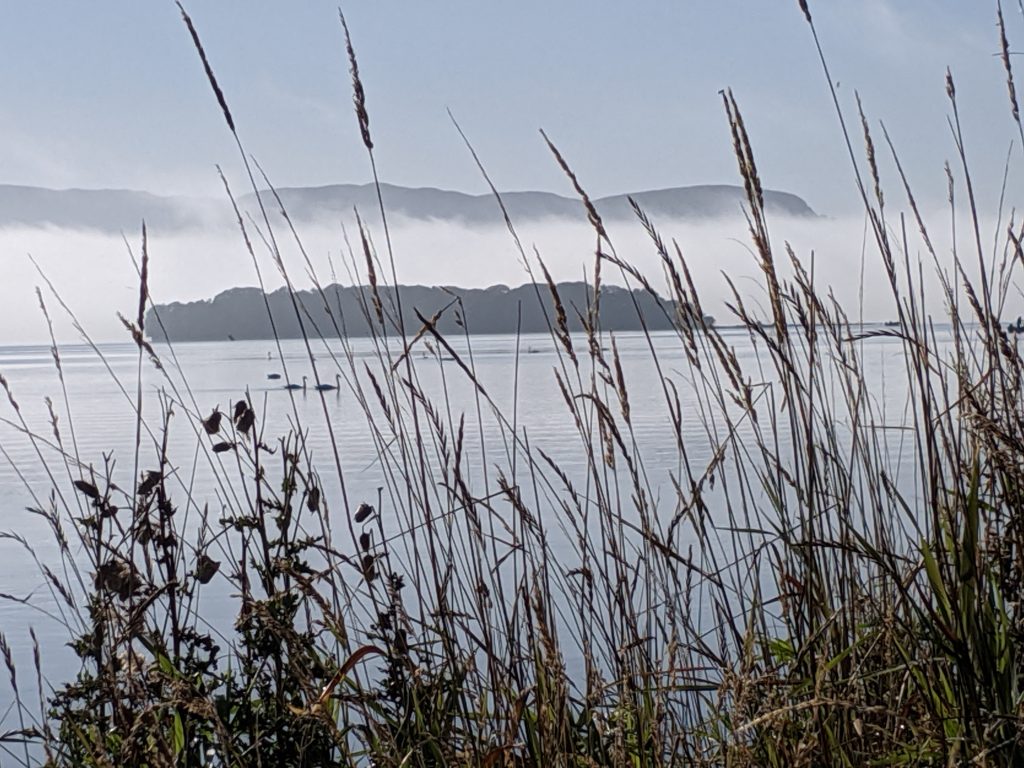
There is a moment, just as the morning mist lifts from the Lomond and Ochil Hills, when Loch Leven feels almost otherworldly. The soft ripple of water, the whisper of reeds, the distant call of birds arriving from thousands of miles away — it all weaves together into a landscape that feels both ancient and alive.
The Loch Leven Catchment is one of Scotland’s quiet treasures. Small but vital streams wind their way through the countryside, feeding the largest loch in Lowland Scotland. Visitors come to walk or cycle the Nature Trail, to breathe deeply, to slow down, and to reconnect with the natural world. And in autumn, something magical happens. Millions of pink-footed geese descend from Iceland and Greenland, filling the skies with movement and sound. They rest here, gathering strength for the next leg of their migration. It’s a spectacle that reminds us how deeply connected this place is to the rhythms of the planet.
But Loch Leven is speaking to us in a new way now.
Climate change is reshaping the loch’s delicate balance. Warmer temperatures, dry springs, and sudden heavy summer rains are creating the perfect conditions for algal blooms.
When the first big rainfall of summer hits, nutrients wash off surrounding fields and rush into the loch. Cyanobacteria — blue‑green algae — feed on this sudden abundance, multiplying rapidly.
Waters turning an opaque green
A strong, unpleasant smell drifting along the shoreline
Warnings against swimming
Walks that feel less like a retreat and more like a reminder of what’s at stake
This isn’t just a Loch Leven problem. Freshwater catchments across Scotland — and around the world — are facing the same pressures.
Thankfully, Loch Leven is one of the most studied freshwater ecosystems in the UK. Scientists from the Centre for Ecology & Hydrology have monitored it since 1968.
Because of this long-term research, we understand how water quality has changed and how wildlife responds to that. We can also see how climate patterns influence the loch.
Much of this data — from water chemistry to crustacean counts to waterfowl surveys — is freely available to the public through the Loch Leven Portal under the Open Government License.
Science gives us clarity. But protecting Loch Leven requires something more: community.
Across Scotland, volunteers are already stepping up. Through the Riverfly Partnership, local groups monitor freshwater quality by surveying riverflies — stoneflies, caddisflies, and mayflies — species that are excellent indicators of ecosystem health.
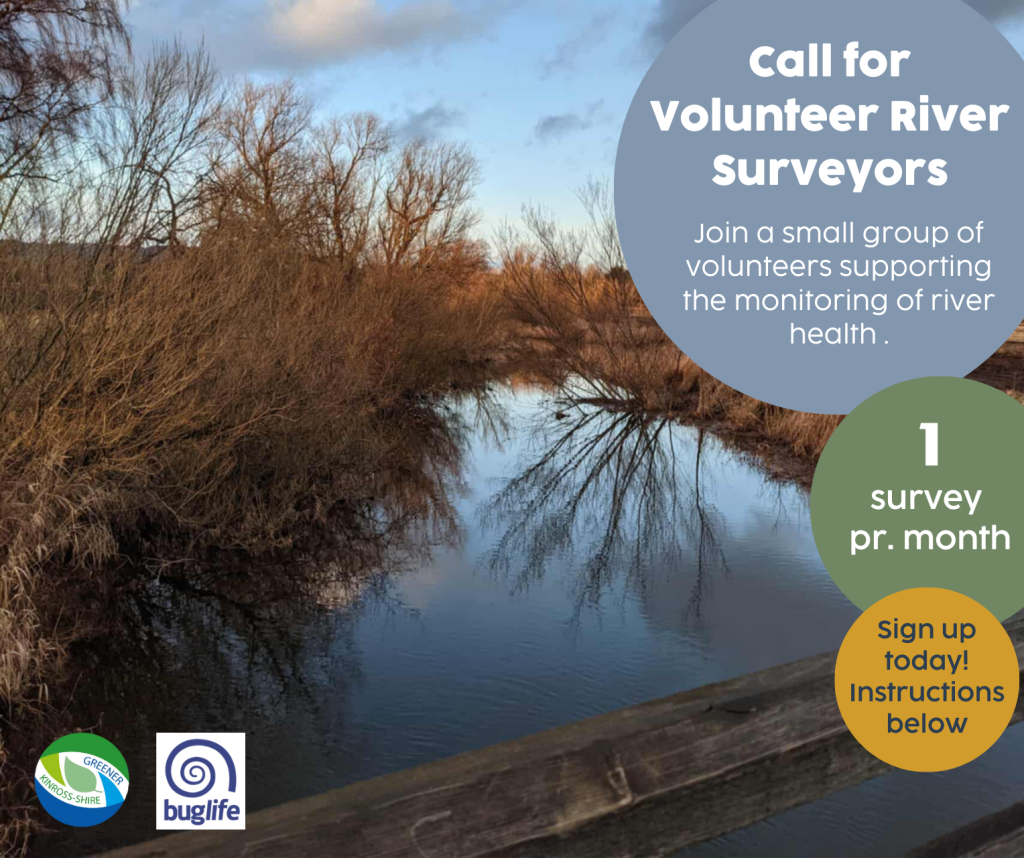
Now, Greener Kinross‑shire is planning to start the local Citizen Science programme. It would be apart of Guardians of Our Rivers (GOR), the project led by Buglife Scotland. Volunteers receive training and support to survey one local river, learning how to identify freshwater invertebrates and understand what their presence (or absence) reveals about water quality.
No experience is needed. Just curiosity, care for nature, and a willingness to learn.
GOR is more than a monitoring project — it’s a chance to build skills, deepen your connection to local wildlife, and become part of a growing network of people who refuse to stand by while our rivers and lochs struggle.
We are currently forming our volunteer group. If you are passionate about nature and interested in joining the programme – Contact us
